All Entries in the "Trade Management" Category
Las Vegas Traders Expo
November 9, 2012 at 2:51 pm
 Next Friday (Nov. 16) at the Las Vegas Traders Expo, I’ll be teaching live at 1:15pm PT. I hope you can make it to my session if you’re located near Vegas or the west coast.
Specifically, I’ll be discussing 8 Steps to Trade Your Way Better. I have a lot of good stuff planned, plus I’ll share the setups which have been working well for me recently as well as the best setups I see in the market right now. I’m excited about being there and giving you some insights for better trading.
Make plans to be there by pre-registering or just show up (it’s free)!
Trade Like a Bandit!
Jeff White
Subscribe to our Stock Pick Service to get our trades.
Misdiagnosed Patterns Can Still Pay (HAR Trade Review)
September 16, 2012 at 3:47 pm
I don’t even know how many charts I’ve read over the years, but there are a couple of commas involved. I’ve been able to identify quite a few patterns and benefit from them, and of course I’ve been wrong a lot too.
What’s funny is that in this game, as long as you’re managing your risk well, you can sometimes be dead wrong on the pattern and still make money. Let me give you an example.
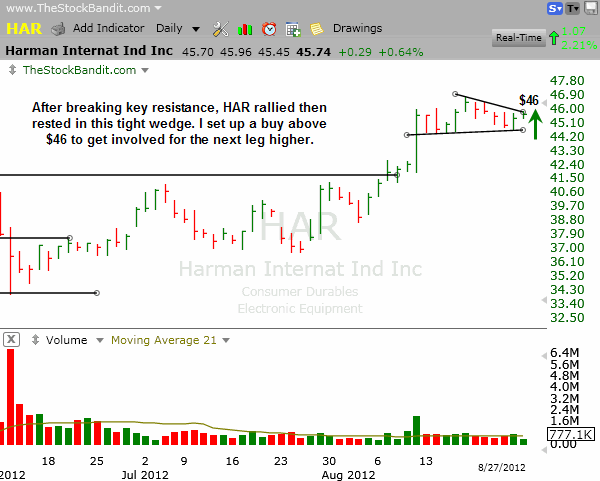
A few weeks ago, I noticed HAR as a stock which had cleared an important area ($42 in early August) and then had settled into a rest phase. I drew my trend lines and recognized a wedge, which was also a pennant after the advance in price. I set up a buy for $46 to get long on a return of strength.
Here’s a look at the chart of HAR when I set up the trade:
That buy triggered the next day, but the stock couldn’t get going. It actually churned for the next 6 sessions, including a test on day 5 of my stop, holding just a short distance above it to keep me in the trade. That dip was a test of support, but I was leery because I considered this to be a failure of the pattern and I expected to be taken out of the trade for a small loss.
Here’s the HAR chart at that point in the trade, and I began to realize the pattern was now a large channel and still intact:
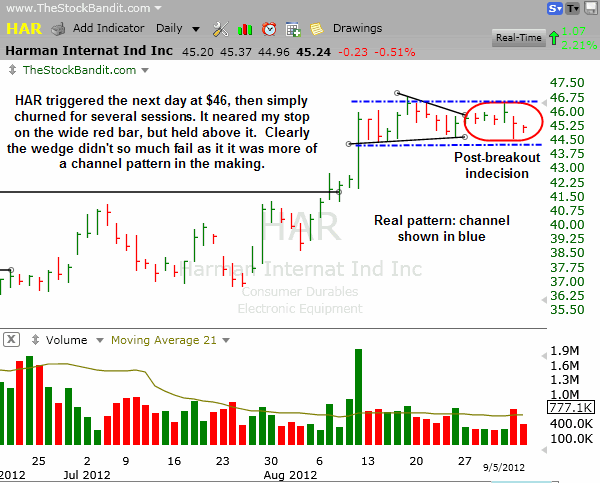
This gave me a bit more confidence in the trade when the next day price lifted to create a little breathing room to my stop. It showed a bit more follow through, then held for a few days before hitting Target 1 on Thursday for a 5.2% profit.
Here’s a look at HAR after the return of strength:
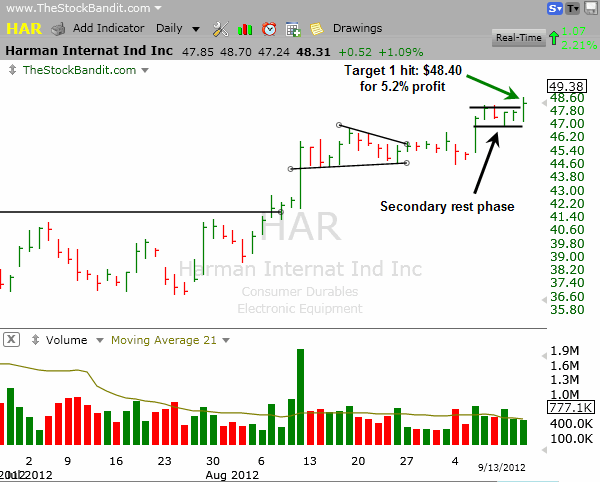
This gave me an opportunity to lock in some gains and tighten my stop for remaining shares, which I did. Then on Friday, the stock rallied again, but hesitated $0.14 shy of Target 2, which was set at $49.60. Rather than hope for an extra few cents while risking more than $2 (my stop had been moved to $47), I booked the 7.4% winner and notified Bandits of my adjusted exit.
Here’s a look at HAR as it currently stands:
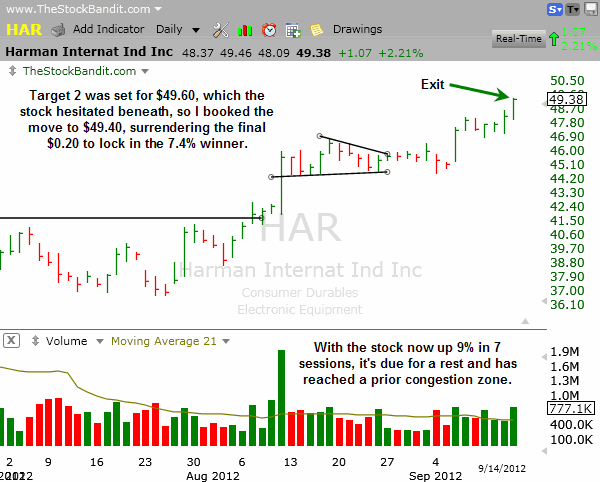
This stock may still hit Target 2, but with it being up now over 9% in the past 7 sessions, it’s due for a rest and it has approached a congestion zone from late spring.
When you’re setting up a trade, you evaluate the price action. But that evaluation doesn’t stop once you’re in. You have to keep asking questions of whether the risk/reward is worth staying in the position. This one had come to a point where stretching for a tiny bit more wasn’t worth the risk, so I took the solid profit with a smile. After all, my initial diagnosis of the setup was wrong, but I was still able to book a nice gain.
Trade Like a Bandit!
Jeff White
Subscribe to our Stock Pick Service to get our trades.
A Few Lessons From AMGN (Trade Review)
September 14, 2012 at 2:38 pm
If you’re looking for excitement, this isn’t a post for you.
This is a recap of a trade which actually yielded nothing – but there were some good lessons tied to it. Plus, I certainly wouldn’t be bragging about a breakeven trade.
The Setup
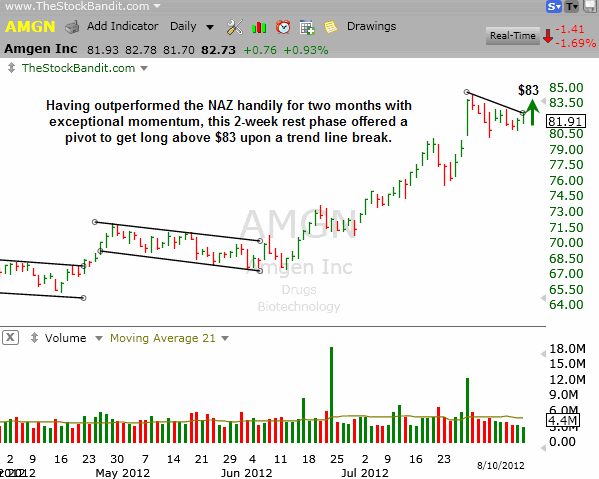
Let’s go back to August 12th, the day I originally listed AMGN for a swing trade buy. The stock had outperformed the NAZ since June 11th with a 22% gain (vs. the NAZ up 7.5%). It clearly had momentum and had been able to put in some well-deserved rest for two weeks. I noticed the descending trend line from the high, and set up a buy upon a break of that trend line at $83.00 and shared it with subscribers.
Here’s a look at the chart of AMGN when I set up the trade:
That buy triggered on Aug. 14th, and over the next few weeks the stock grinded higher but never really gathered momentum. Three times it posted a new 52-week high, only to immediately hesitate afterward.
Adjustments
Having sat in AMGN for a few weeks with limited progress, I tightened my stop loss from $80 (initial stop) to $82 on Sept. 3 in order to reduce risk. The stock had just completed a multi-day pullback and it was appropriate to tighten up after strength returned. I tightened it again to $83 a week later after the stock had tagged the prior high to the penny, only to reverse lower. This looked ominous, so I tightened to my breakeven.
The AMGN chart with my stop adjustments along the way:
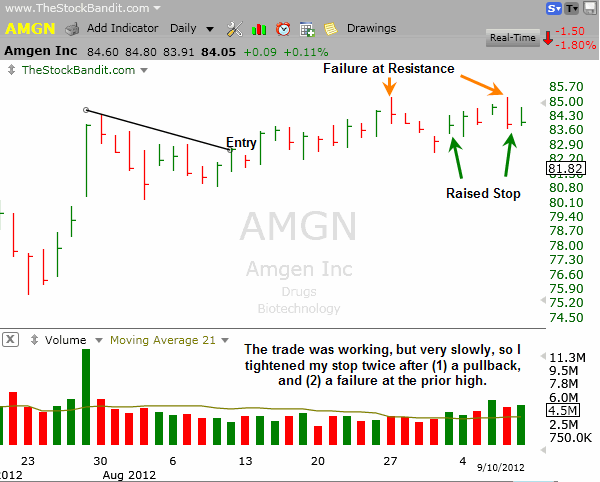
This gave the stock a little wiggle room to keep me in the trade should it turn back up, but it eliminated my effective risk in the trade. A stop out wouldn’t pay me a thing, but for a trade which never took off, neither would it cost me anything.
The Exit
I was taken out of the AMGN position at $83 on Wednesday, and since then the stock has broken down further with a solid breach of the multi-week uptrend line. Where it goes from here, I don’t know, but I sure don’t view this action as bullish so I’m out.
Here’s a look at AMGN as it currently stands:
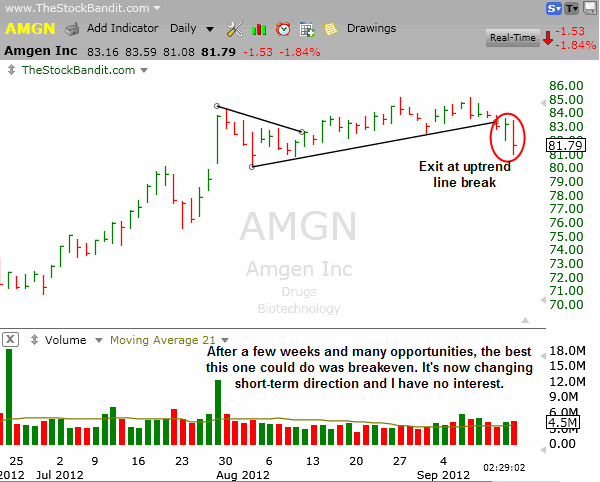
On some trades, breakeven isn’t bad. You enter a great setup, you give it room, you stay patient, and it just doesn’t ever get going. This was one of those.
Hopefully by looking back at this trade, it’ll help you manage your next position better when it acts sluggish. If you’re seeing modest rewards but after ample time you’re really not getting paid, tighten up. Odds are, if it turns lower you’ll be glad you did.
Trade Like a Bandit!
Jeff White
Subscribe to our Stock Pick Service to get our trades.
Picking Up Points in Penney
September 7, 2012 at 9:15 am
Thursday allowed me to close out an excellent 11-day trade in JCP which paid 12.9%.
As simple as that sounds, there were several steps involved, including patience, so I wanted to walk you through the process of this trade from beginning to end in hopes of helping you with your next position.
Perking Up
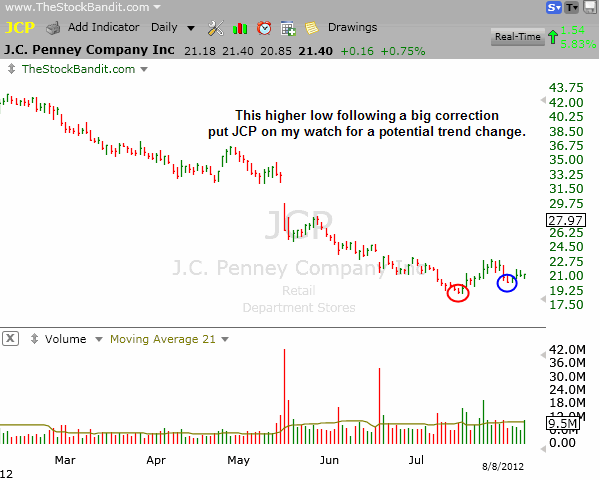
With JCP having endured a significant downtrend from February to July, the stock sat more than 55% off its highs. That alone is never reason to enter a buy, but it can indicate the shorts are overconfident and the stock has become beaten-down enough to produce a bounce.
So, after seeing a short-term higher low established in early August, it was placed on my watch list. Not for a trade, but simply to monitor in case this developed into a change of character.
Here’s how JCP first looked when I noticed it and put it on watch:
Pressuring Resistance
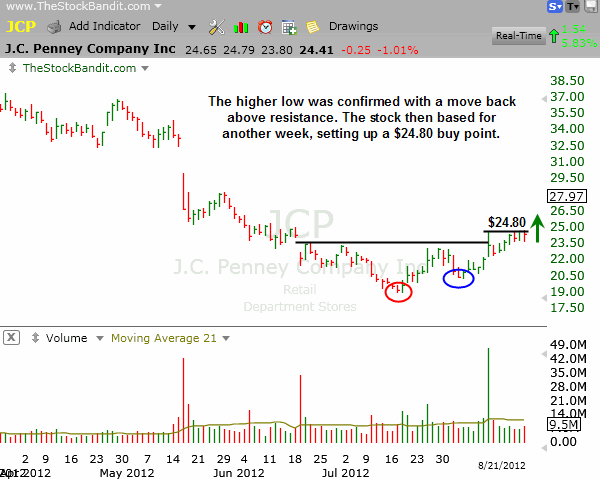
Having then rallied past resistance, JCP then entered into a narrowing base just beneath a short-term level. Dips were getting bought a bit more aggressively, creating some higher lows over the previous few sessions.
I set up a buy for $24.80, which triggered on Aug. 23. Here’s a look at the chart I shared with subscribers when I listed the trade:
Producing Gains
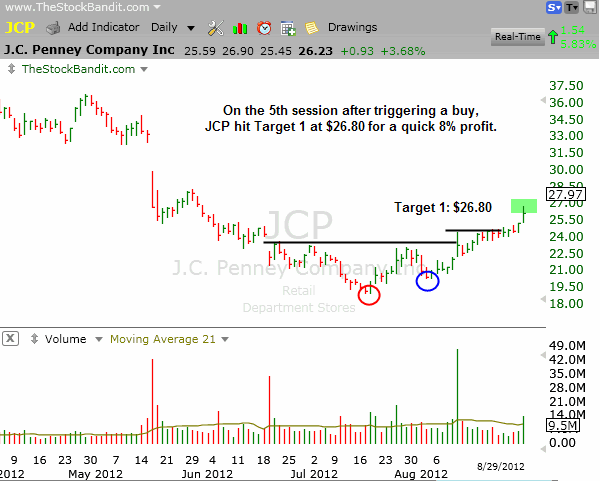
The initial trigger wasn’t met with great enthusiasm, but neither did the stock fail its breakout attempt in grand fashion. It was quiet, so I stayed with it without panicking. Just a few sessions later, Target 1 had been reached for a pretty quick 8%.
The stock pushed just 8c past that level before seeing some mild profit-taking, which ultimately allowed me to tighten my stop for remaining shares. Here’s a closer look at the chart as of Target 1:
Pausing Before Payoff
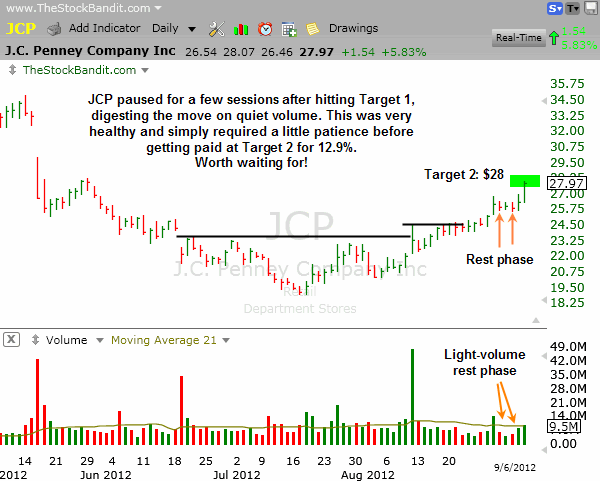
The profit-taking was mild and took place on quiet volume, which meant virtually zero pain but also required a little patience. This stage of trades always brings on the questions… “is it done?”… “should I just book this and move on before it pulls back deeper?”.
But I stayed with my tightened stop and waited for the stock to either roll back over and stop me out or push higher and prove itself. That resulted in the final push, worth 12.9%.
Here’s a look at the rest phase before the pop to Target 2:
This was an excellent swing trade which paid off quite nicely. It took some good initial analysis to detect the play, it took proper management of the position once it was on, and it took a little patience to stick with it through the mid-trade lull before the final pay day.
These are the kinds of trades we make a big portion of our money on. Every one of them is shared with subscribers of our stock pick service, along with the entire trade plan from the outset and ongoing evaluation once the position has been put on.
Try us out for yourself and see if we don’t deliver the value I’m referring to. It’s no wonder so many of our members find the monthly price so easy to pay when plays like this are provided.
Trade Like a Bandit!
Jeff White
Subscribe to our Stock Pick Service to get our trades.
Week 18 Trades Review (Video)
May 6, 2012 at 3:41 pm
 Week 18 is in the books, and overall it was a solid week of trading. Despite not taking a lot of trades, it was a profitable week thanks to caution on the long side and some shorts which fared well in the decline.
I wanted to offer a video recap of the trades just as I have so far each week this year. This should give you a feel for not only how I managed my trades, but also the kinds of setups which have been working well of late.
For those curious about our trading style in the member area, this should give you a good indication of what a typical week looks like. Check out the free trial to our stock pick service if you’re interested in adding our ideas to your own.
Be sure to view in HD (720P) and full-screen mode for best quality in the video.
Trade Like a Bandit!
Jeff White
Producer of The Bandit Broadcast
Get our free newsletter to keep up!
Follow @TheStockBandit
Play Like A Pro – WTBR Episode 5
May 3, 2012 at 8:32 am
 Today, I bring you Episode 5 of When The Bell Rings.
In this episode, we’ll talk about some distinct differences among traders regarding their approaches to trading. It should either give you some added motivation, or a boost in confidence.
I hope you get a lot out of this installment. Keep coming back for more in the days ahead, and of course if you find these helpful, then let me know!
Run time is 3:08.
(Direct video link is here for those interested in embedding it elsewhere to share).
Trade Like a Bandit!
Jeff White
Producer of The Bandit Broadcast
Get our free newsletter to keep up!
Follow @TheStockBandit
Week 17 Trades Review (Video)
April 30, 2012 at 8:20 am
 Week 17 is behind us, but I wanted to offer a video recap of the trades I took. There were several other trades I had planned to take, but due to gaps my trigger prices were negated. Nonetheless, it was a solid week.
This should give you a feel for not only how I managed my trades, but also the kinds of setups which have been working well of late. For those curious about our trading style in the member area, this should give you a good indication of what a typical week looks like. Check out the trial if you’re interested in adding our ideas to your own.
(Direct video link is here for those interested in embedding it elsewhere to share).
Be sure to view in HD (720P) and full-screen mode for best quality in the video.
Trade Like a Bandit!
Jeff White
Producer of The Bandit Broadcast
Get our free newsletter to keep up!
Follow @TheStockBandit